
What is narcolepsy (sleeping disorder)?
Narcolepsy is a neurological disorder that causes excessive daytime sleepiness and sudden sleep attacks. It’s not simply fatigue; it’s caused by an underlying brain problem, not just a lack of sleep.
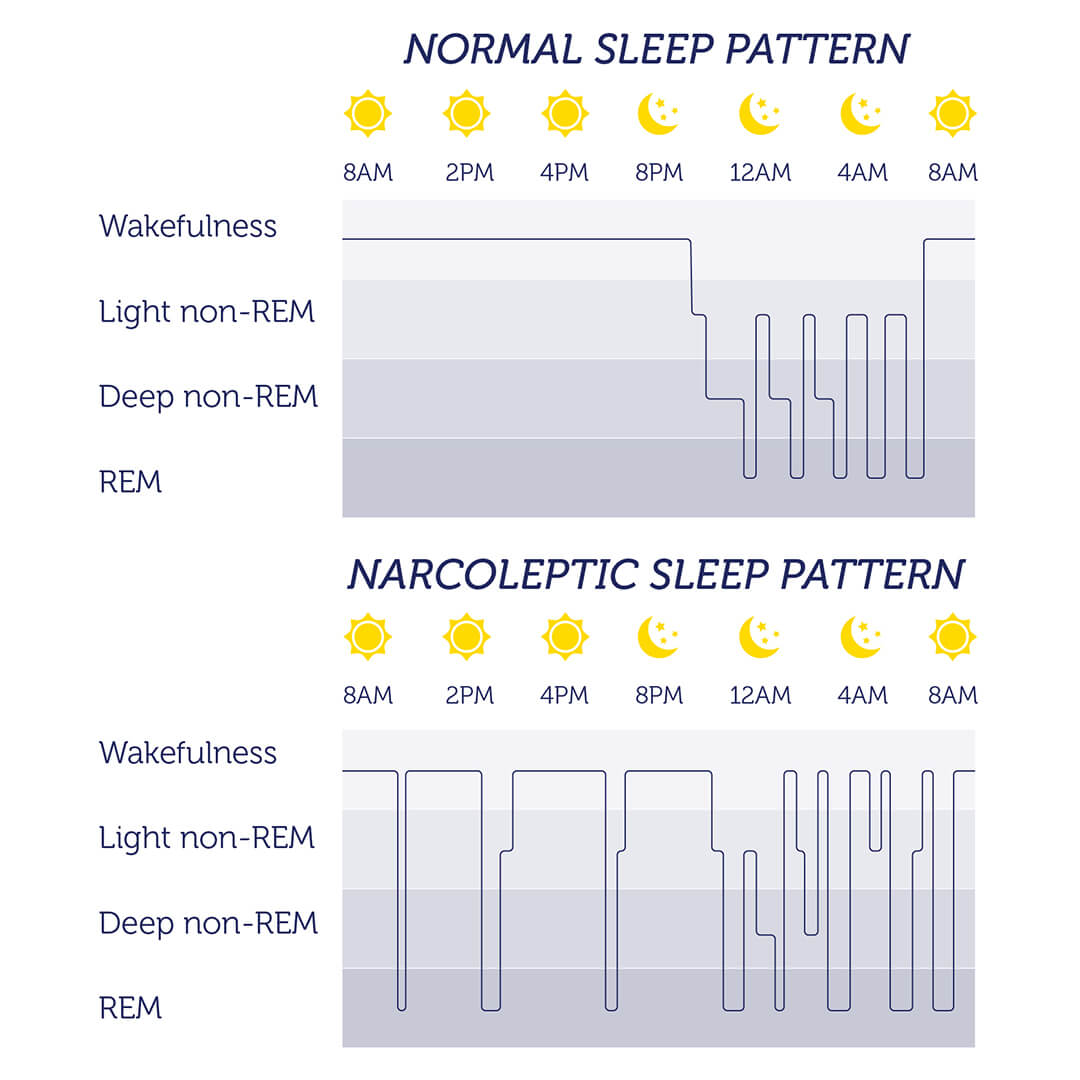
Typically, people go through several sleep cycles during the night, each lasting approximately 100-110 minutes. These cycles are divided as follows:
- Non-rapid eye movement (NREM) sleep
- Rapid eye movement (REM) sleep. This is when you dream and your muscles relax.
Most people enter REM sleep 70-90 minutes after falling asleep. However, people with narcolepsy enter REM sleep almost immediately. This can lead to symptoms such as sleep paralysis, vivid dreams, and cataplexy (sudden muscle weakness while awake).
What is the prevalence rate of narcolepsy?
Narcolepsy affects between 1 in 2,000 and 1 in 5,000 people. Sadly, only about 25% of those affected are accurately diagnosed. Some people are wrongly labeled as having an emotional or psychiatric problem.
Symptoms of narcolepsy (sleeping disorder)
Narcolepsy is a disorder with a variety of symptoms, and the frequency of these symptoms varies among affected individuals:
- Excessive daytime sleepiness : This symptom, universally experienced by all individuals with narcolepsy, results in feeling sleepy during the day or having an uncontrollable need to sleep.
- Cataplexy : This condition, which affects about 70% of patients, involves a sudden loss of muscle strength, often triggered by strong emotions such as laughter, anger, or surprise.
- Sleep paralysis and vivid hallucinations : These are experienced by 10-20% of people with narcolepsy. Sleep paralysis causes people to become immobile or unable to speak while sleeping or awake. These episodes may be accompanied by auditory or visual hallucinations.
- Microsleep : Short sleep episodes that last only a few seconds. During these moments, individuals may fall asleep instantly and may not even realize it.
- Nocturnal awakenings : Despite daytime sleepiness, people with narcolepsy often wake up in the middle of the night, disrupting their sleep patterns.
- Helplessness : A general loss of muscle strength often associated with episodes of cataplexy.
- Spontaneous contraction of leg muscles : The leg muscles contract spontaneously without a clear trigger.
- Rapid transition to REM sleep : Unlike most people who enter REM (dream) sleep 70-90 minutes after falling asleep, people with narcolepsy can enter this stage within minutes of falling asleep.

DNA鑑定を注文する
血縁関係から健康や特性に関する鑑定まで、あなたのニーズに合った様々なDNA鑑定を提供しています。

サンプル採取&返送
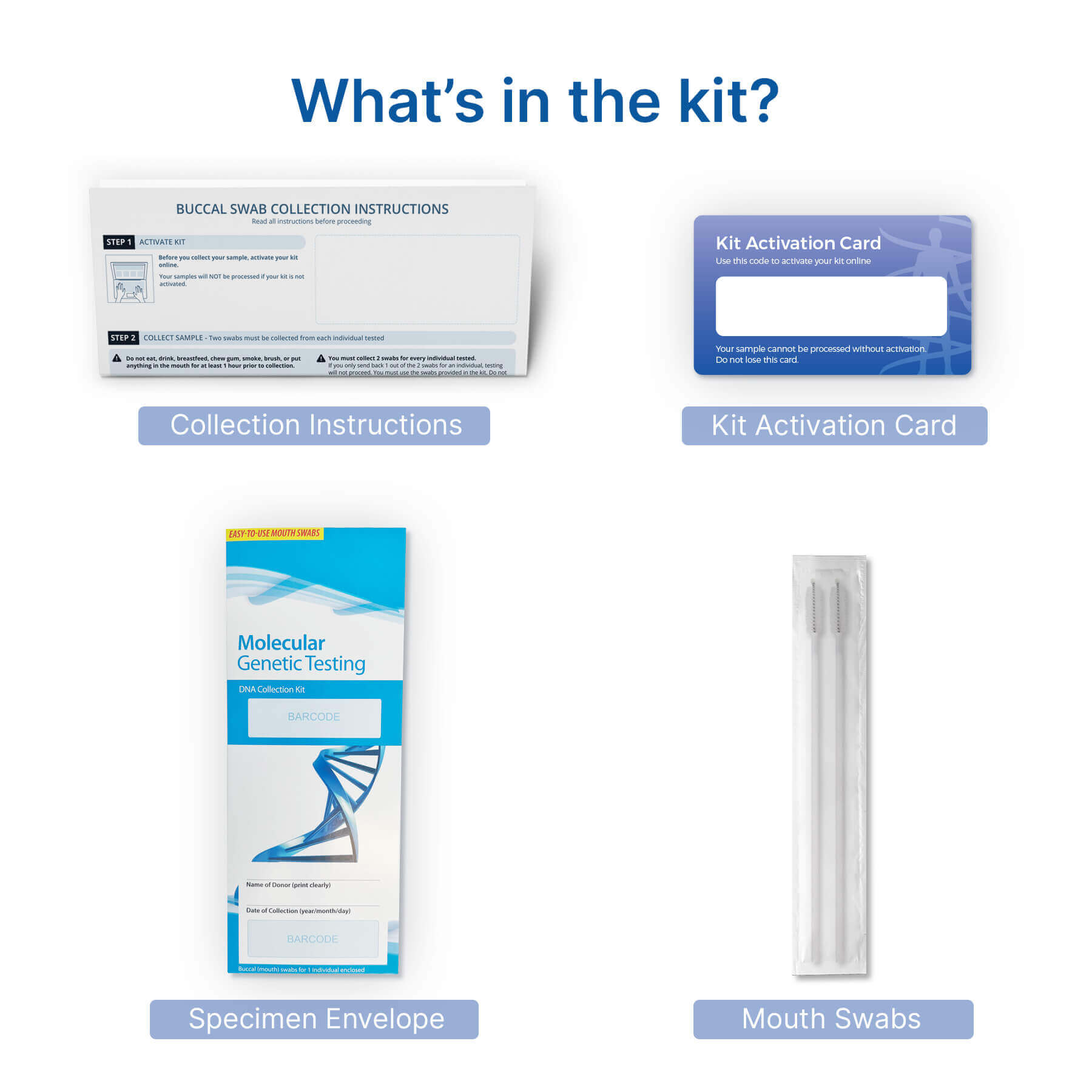
ジーントラック特製の口腔内綿棒キットを使用してDNAサンプルを採取し、返送用の封筒で弊社ラボまでご返送ください。

鑑定結果を受け取る
鑑定が完了し、結果報告書が作成されると、すぐにセキュアなオンラインログインにて結果を閲覧することができるようになります。また、弊社の専門家チームは、どのような質問にも対応可能です。